
Asphalt Driveway Paving in Dayton, Soddy Daisy and Chattanooga
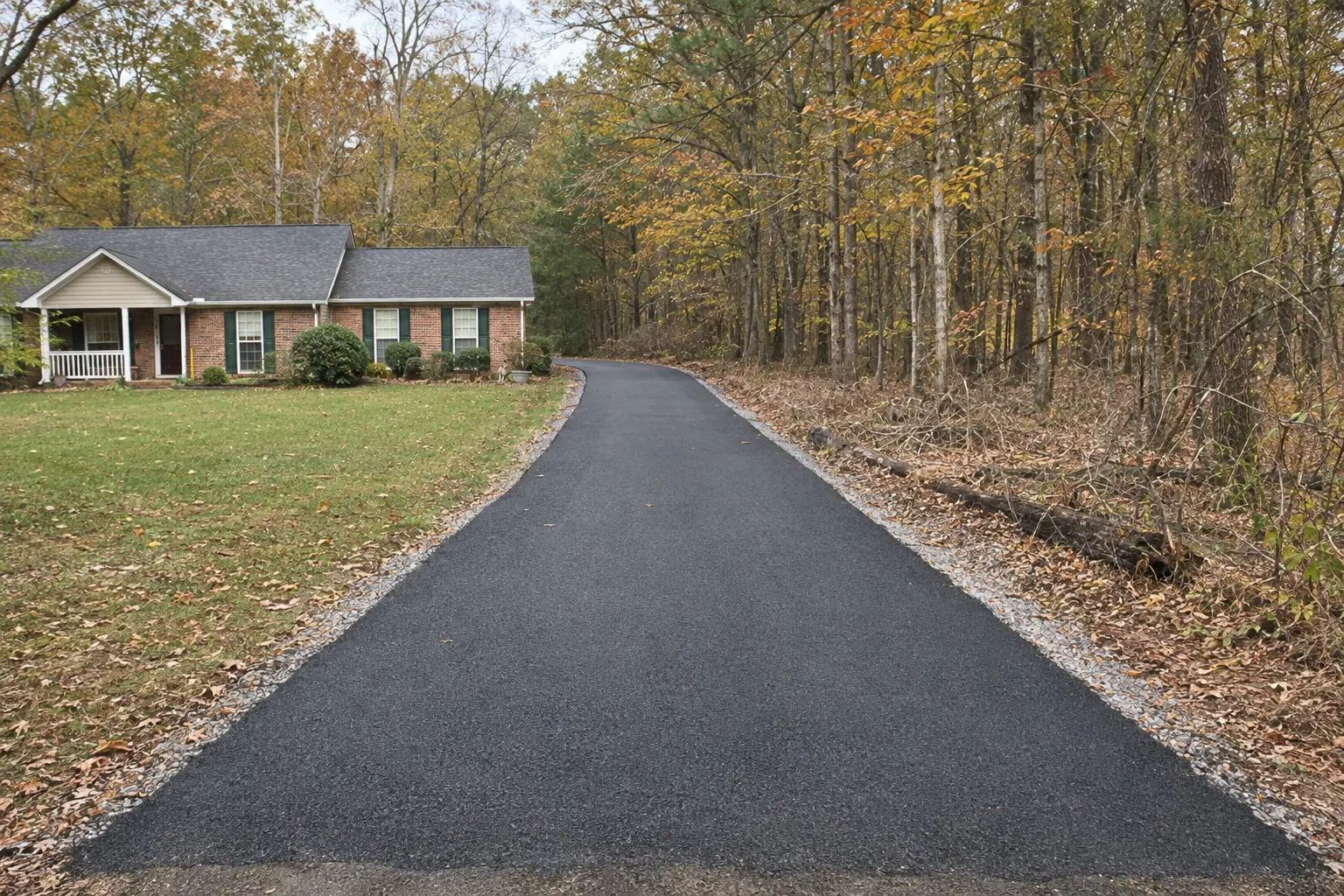
A new asphalt driveway in Chattanooga, Dayton or Soddy Daisy holds up when three things go right: a firm base under it, a shape that sends water off the surface, and hot mix that is placed and rolled in the right weather. Most of what separates a drive that lasts from one that sags or breaks up early happens before the first load of asphalt shows up.
What goes under a new asphalt driveway
Every asphalt drive sits on a base, a layer of crushed stone that is graded and packed tight so it can carry cars, trucks and the odd delivery van without moving. The asphalt on top is a wearing surface. It spreads the load, but it cannot make up for soft ground underneath.
What happens to your current drive depends on its condition. Firm, well drained stone can often be regraded, topped up and compacted into the new base. Old asphalt that is broken up, crumbling or sunken usually comes out, so the crew can fix what is under it instead of paving over the problem.
Any spot where the ground gives under a tire after a wet week, or where water has been sitting for years, gets dug out and refilled with clean stone. That step adds time on the front end and saves the new surface from dips and ruts later.
How the job usually goes
No two drives are the same, but an asphalt driveway installation tends to follow this order.
- Prep or removal. Old asphalt, grass along the edges and any roots in the way come out, and the final width is marked.
- Grading. The ground and stone are shaped so the finished surface has a crown or a steady slope (a slight high line that sheds water to the sides) and drains away from the house and garage.
- Base stone and compaction. Stone goes down where it is thin or missing, and the whole base is rolled until it stops moving underfoot.
- Paving and rolling. Hot asphalt is laid with a paving machine, or by hand in tight corners, then rolled while it is still hot so the stone and binder (the liquid asphalt that holds the mix together) lock into a dense surface.
- Edges and shoulders. The drive is tied in where it meets the road and the garage slab, and gravel or soil is packed along the sides so the edges have support.
When you get a quote for driveway paving, ask the crew to walk you through what each step means for your drive. Their answers on grading and base work tell you more about the result than any other line on the estimate.
Reading your drive before the estimate
A walk down the drive the day after a good rain shows most of what an estimator will look for.
| What you see now | What it usually means for the job |
|---|---|
| Firm surface, water runs off within an hour or so | Grading, topping up the base and paving |
| Old asphalt broken into pieces or sunk in spots | Removal and a rebuilt base where it failed |
| Puddles still standing the next day | Regrading, and sometimes a drainage fix, before paving |
| Edges falling away into the yard | Wider base at the sides and packed shoulders |
| A steep stretch where stone or soil washes out | A plan for runoff so water does not undercut the new edge |
Note where water sits, where tires slip or sink and where the edges are falling away. Those notes make the estimate more accurate and let you check that the plan covers each one.
Weather and timing around Dayton and Chattanooga
Tennessee and north Georgia winters usually bring freeze-thaw cycles. Water that soaks into a weak base freezes, lifts it, then thaws and leaves it soft, which is why tired drives often look their worst in January and February. A drive that sits in shade or at the bottom of a grade stays wet the longest.
Paving wants the opposite. Hot mix has to stay warm long enough to be rolled tight, so most residential paving in the region happens in the warmer, drier months, roughly April to October. A mild, dry stretch in late fall can still work, but crews watch the forecast closely.
That makes November to February a good time to plan. If your home is in Dayton, Soddy Daisy or Chattanooga, have the drive looked at while winter shows you where the water goes, then line the work up for when the weather turns. We also work across the line in north Georgia, in towns like Ringgold and Rossville.
The first weeks on new asphalt
Fresh asphalt stays soft until it cools and hardens all the way through, and it takes longer on hot days. Many crews ask you to keep cars off it for a few days. After that, a few habits help the surface settle in without marks.
- Avoid turning the steering wheel while the car is standing still, which twists the surface.
- Keep kickstands, trailer jacks and ladder feet off it, or set them on a board.
- Park away from the edges, the part of the drive with the least support.
- Keep heavy trucks off the drive for longer than cars, and ask your crew how long.
If you are ready to replace a worn drive or put in a new one, ask us for a Free Estimate. We are licensed and insured, and we will tell you what your base needs before any asphalt goes down.
Common questions
How long before you can drive on a new asphalt driveway?
Many crews ask you to wait a few days before driving on it, and longer in hot weather. Your crew can give you a time that fits the mix, the weather and your drive.
Does an old driveway have to come out before new asphalt goes down?
Not always. A firm, well shaped surface can sometimes be paved over, while a broken or sunken one usually comes out so the base can be fixed first.
What time of year is best for paving a driveway in Tennessee?
Warm, dry months, roughly April to October in most years, give hot asphalt the best chance to compact well. Getting an estimate over the winter leaves time to plan the work before then.
Areas we serve
Our services
Have a question about your project? Call (423) 660-2000